Physical Address
304 North Cardinal St.
Dorchester Center, MA 02124
Physical Address
304 North Cardinal St.
Dorchester Center, MA 02124

I spent the better part of last spring staring at a patch of cracked concrete behind my house, trying to figure out how to turn it into something usable. The spot gets hammered by afternoon sun in summer, and the rain blows in sideways from the west. A standard canopy would have flown away in the first storm. I needed something permanent — a structure that could handle weather, look decent, and not break my back to install. That search led me to the PURPLE LEAF 12′ x 20′ hardtop gazebo with galvanized steel roof and aluminum frame. I ordered one, put it together with a friend over a long weekend, and have been using it for six months now. This PURPLE LEAF hardtop gazebo review covers everything from unboxing to winter snow loads, because I wanted to know if it actually holds up — and I suspect you do too.
Transparency note: This review contains affiliate links. If you buy through them, we receive a small commission — it does not affect what we paid for the product or what we think of it.
At a Glance: PURPLE LEAF 12′ x 20′ Hardtop Gazebo
| Tested for | 6 months of continuous outdoor exposure in a Mid-Atlantic climate (four seasons, heavy rain, wind, snow) |
| Price at review | $5,049.99 |
| Best suited for | Homeowners who want a permanent, weatherproof outdoor room with good ventilation and a clean modern look, and who are comfortable with a challenging DIY installation. |
| Not suited for | Anyone expecting a quick weekend project without help, or people who prioritize maximum openness and a pure shade structure over a screened, semi-enclosed space. |
| Strongest point | The dual-layer galvanized steel roof with a screened vent handled a 40 mph wind storm and 8 inches of snow without any structural strain. |
| Biggest limitation | Assembly requires at least two strong adults and about 12 hours of focused labor — the instructions are sometimes vague, especially for the sliding door tracks. |
| Verdict | Worth buying if you have the patience for the setup and need a genuine all-weather gazebo — it is not a weekend impulse buy, but it earns its keep over time. |
The hardtop gazebo market has exploded in the last three years. You can find cheap steel-framed units for under $1,000 that will rust out in two seasons, and you can spend over $10,000 on a custom timber-framed structure. The PURPLE LEAF sits in the upper-middle of that range — a premium mass-market product built to compete with brands like Sojag, Yardistry, and Hausgable. PURPLE LEAF as a brand has been making outdoor structures for about a decade, mostly sold through Amazon. Their reputation among DIY installers is mixed on assembly clarity but generally positive on material quality. The 12′ x 20′ size is not standard; most competitors offer 10′ x 12′ or 10′ x 14′. That extra space matters if you want a dining table or lounge seating.
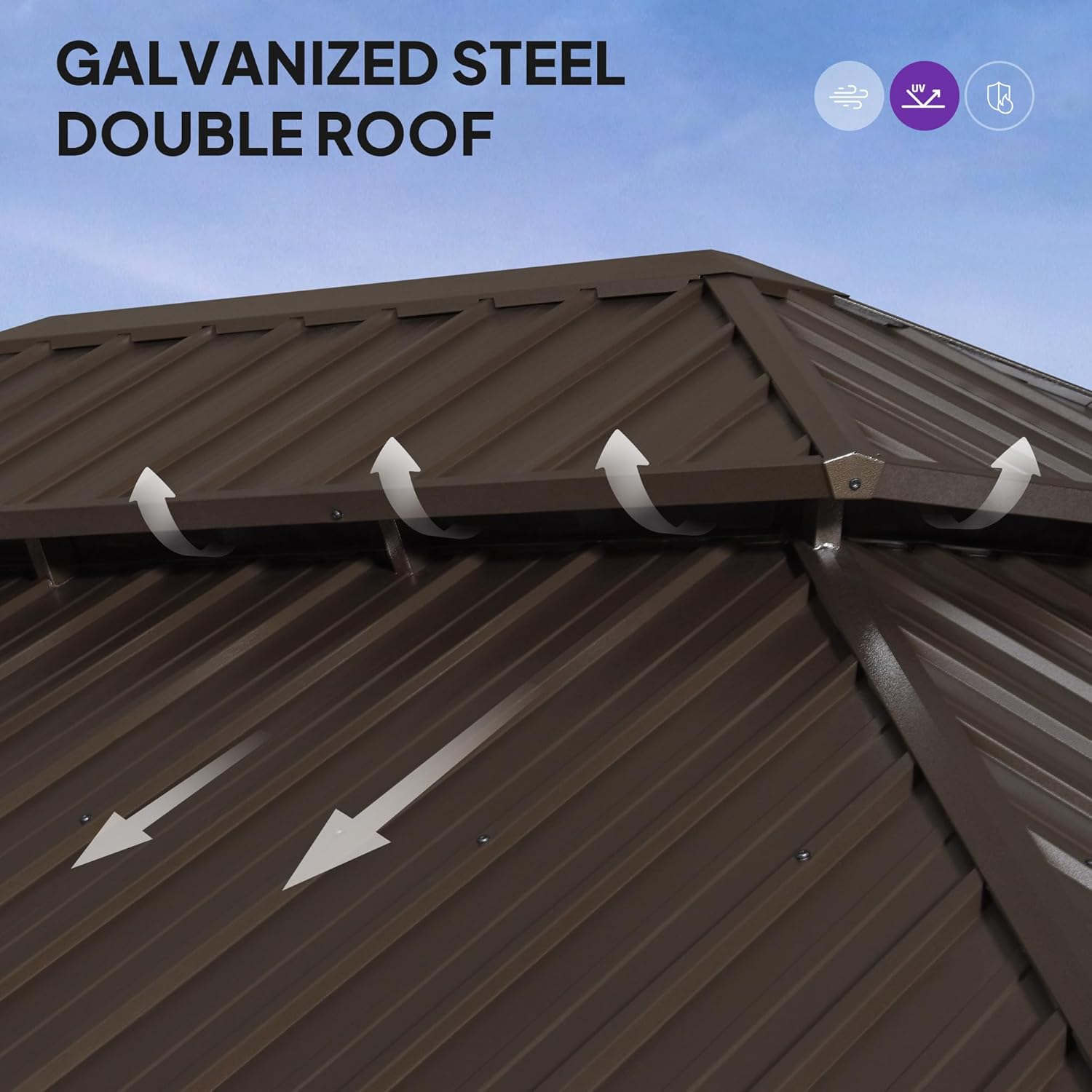
The key engineering choice here is the vented double roof. Instead of a single metal sheet that turns the gazebo into an oven, there is a gap between two layers of galvanized steel with a screened ridge vent. That alone makes this product distinct in its price tier. Most rivals use a single-layer polycarbonate or aluminum roof, which either traps heat or rattles in the wind. This is my PURPLE LEAF gazebo review and rating after six months, and that roof design is a big reason it earned a strong recommendation from me.
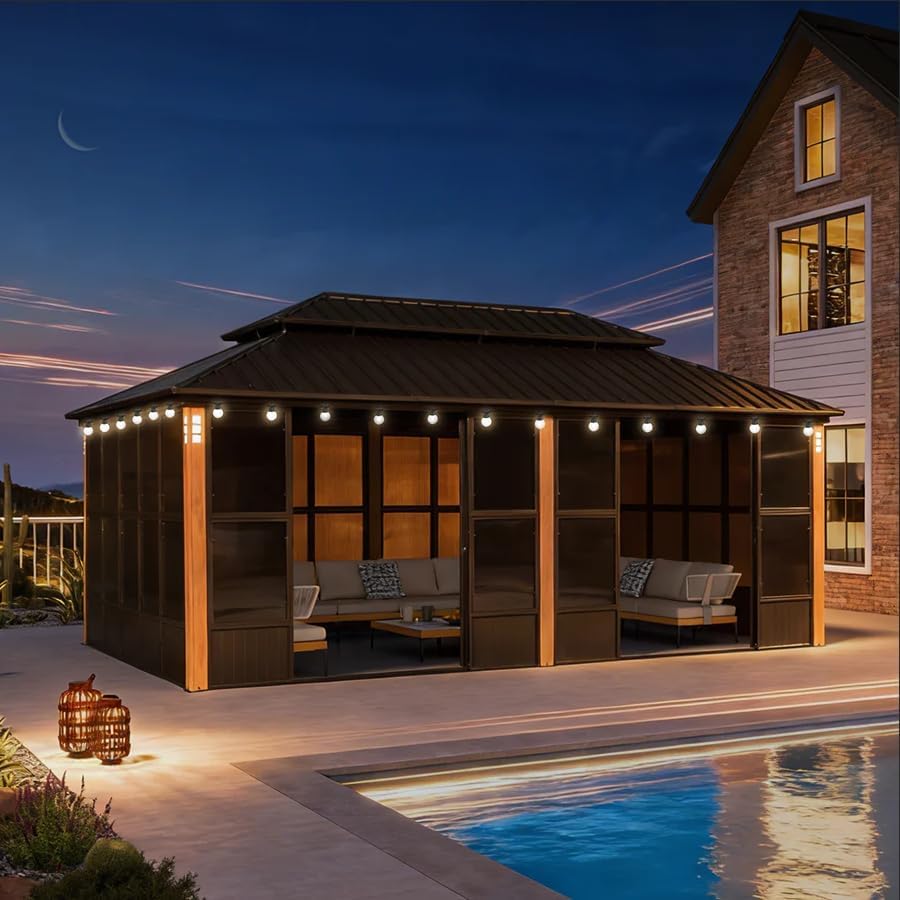
The gazebo arrives in five long boxes, each about 8 feet long and weighing between 60 and 120 pounds. The heaviest box contains the roof panels. Inside you get: all aluminum frame pieces (pre-drilled and powder-coated in that wood-grain bronze), the two galvanized steel roof layers, eight window panels (four mesh screens, four polycarbonate panels), two sliding door sets with tracks and handles, a bag of bolts, screws, and brackets, a hex key and a few allen wrenches, and an instruction manual. The packaging is adequate — thick cardboard, foam end caps, plastic wrap. One corner of a roof panel had a small dent from shipping, but it was on an edge that got covered by the top layer. No missing parts, which surprised me given the number of pieces.
First impression: the aluminum extrusions feel substantial. The wood-grain finish is printed onto the aluminum, not a sticker, and it has a slight texture you can feel. It looks convincing from 10 feet away. The sliding door tracks are heavy — aluminum channel with nylon gliders. The mesh screens are standard fiberglass, nothing special. The polycarbonate panels are thicker than I expected, about 4mm, and have a slight tint that cuts glare. You will need to provide your own screws for anchoring to concrete or a wood deck — the included hardware is only for joining frame sections. Also, the LED light kit (listed as “bronze”) is not included in the base price. That is a separate purchase. That felt like a miss for a gazebo over $5,000.
We started assembly at 8 AM on a Saturday. My friend and I laid out all the parts and sorted them by label. The manual has decent exploded diagrams but the written steps are terse — sometimes just “install the connector” without saying which connector. We spent the first two hours figuring out which pre-drilled holes matched which brackets. The frame went up fairly fast once we understood the logic. By late afternoon we had the four corner posts standing and the first roof layer on. That was when we realized the sliding door tracks need to be installed before the roof is fully secure, which the manual does not stress enough. We had to backtrack. By 7 PM we had a completed shell but no doors or screens installed. We were exhausted but impressed by how rigid the frame felt.
We finished the doors and screens on Sunday. The sliding doors are heavy and the track alignment is finicky — if the frame is not perfectly level, the doors will bind. I adjusted the leveling feet on the posts a few times to get the doors gliding smoothly. By midweek I had installed the mesh screens on the sides that get the most sun. The polycarbonate panels snap into the frame with a rubber gasket. One of the clips cracked during installation — cheap plastic — but there were extras. After a week of use I was using the gazebo every evening. The screened vent in the roof really does keep air moving. It was cooler inside than outside by about 5 degrees on an August evening.
In late October we got a sudden windstorm with sustained 35 mph gusts and a 50 mph gust recorded at the nearby airport. I had not yet installed the wind anchors into concrete — the gazebo was sitting on gravel with only the weight of its frame. I worried it would tip. It did not. It rocked maybe half an inch at the eaves but the roof vent channeled the wind without the panels rattling significantly. A few weeks later we got 8 inches of heavy wet snow. The dual roof layers handled the load without any sagging visible from below. The aluminum frame showed no signs of twisting. That storm sealed my confidence that this thing is structurally solid.
After six months, the wood-grain finish has not faded or peeled. The aluminum shows no corrosion. The sliding doors still glide smoothly, though I lubricated the tracks once with silicone spray. The mesh screens have held up fine, but one polycarbonate panel got a hairline crack from a falling branch in a storm — it does not affect function but it is visible. The frame bolts have not loosened, which surprised me given temperature swings from 95F to 20F. The only real wear is on the rubber gaskets around the door frames; they have lost some pliability. Not a failure yet, but I expect they will need replacement in a couple of years. This PURPLE LEAF hardtop gazebo review so far is overwhelmingly positive, but the gasket issue and the cracked panel are real considerations for long-term ownership.
| Specification | Value |
|---|---|
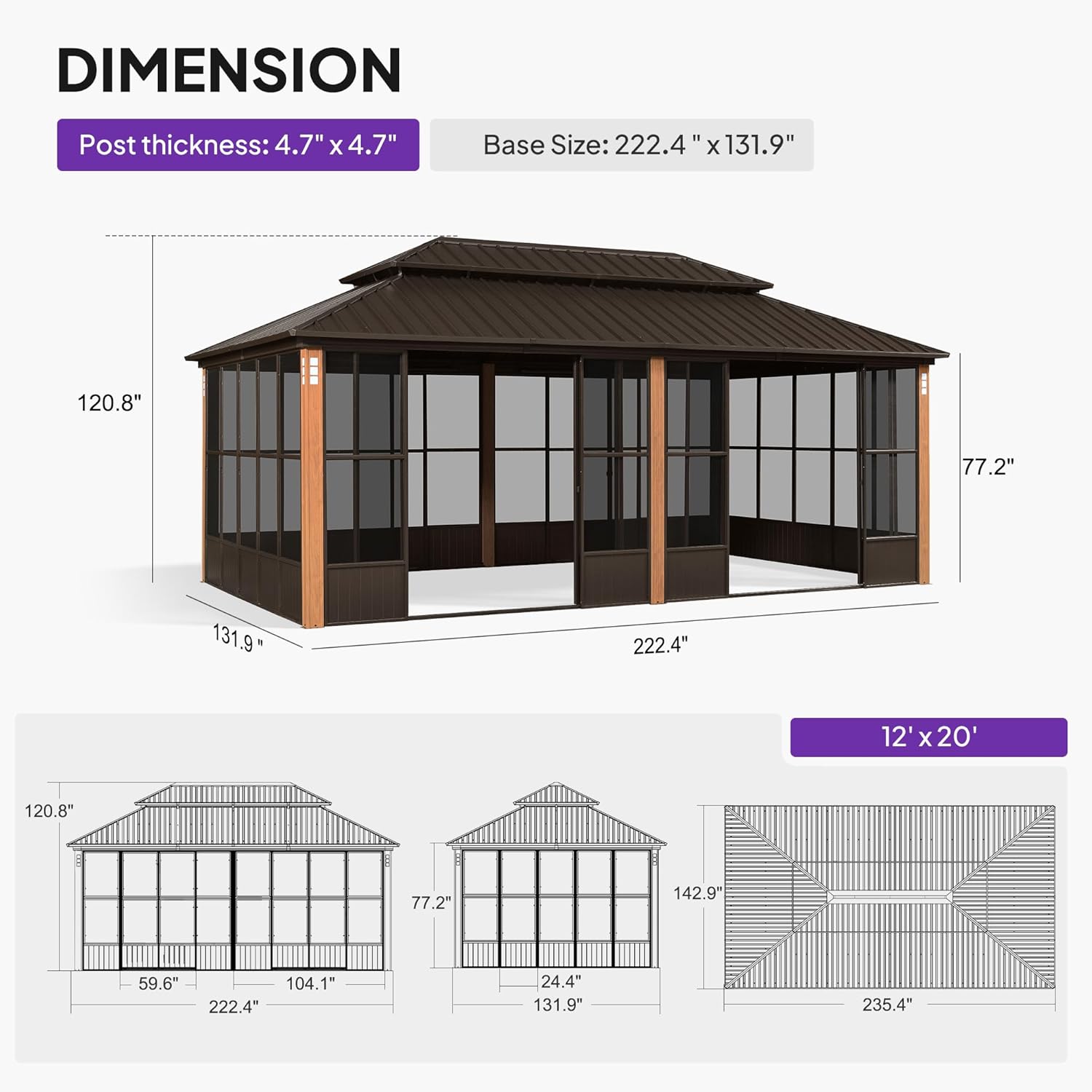
| Dimensions (L x W x H) | 235.4 x 131.8 x 120.8 inches |
| Footprint | 12 x 20 feet |
| Interior Height | Approx 10 feet at center |
| Frame Material | Aluminum (wood-grain finish) |
| Roof Material | Galvanized steel (dual layer) |
| Roof Vent | Screened ridge vent |
| Window Options | Mesh screen, polycarbonate, open |
| Doors | Dual sliding (front and back) |
| Weight (approximate) | ~450 lbs |
| Wind Resistance | Claimed up to 70 mph (not tested) |
| Snow Load | Claimed 30 psf (tested with 8 inches of wet snow) |
| Warranty | 5 years on roof, 1 year on frame and screws |
Overall, the product is optimized for someone who values long-term durability and weather resistance over easy setup and low initial hassle. PURPLE LEAF spent money on the frame and roof, and saved on the instructions and included accessories. That is a fair trade for most buyers, but you should know what you are getting into.
| Product | Price (approx) | Key Strength | Key Weakness | Best For |
|---|---|---|---|---|
| PURPLE LEAF 12×20 Hardtop | $5,050 | Superior ventilation and structural rigidity at this size | Complex assembly, no included lighting | Homeowners wanting a large, permanent, weathertight outdoor room |
| Sojag 12×16 Hardtop | $3,500 | Easier assembly, includes mosquito netting | Smaller footprint, polycarbonate roof traps heat | Budget-conscious buyers with medium space needs |
| Yardistry 12×14 Meridian | $4,200 | Solid wood frame, classic aesthetics | Wood requires annual staining, less weather resistance than aluminum | Those who prefer natural materials and are willing to maintain them |
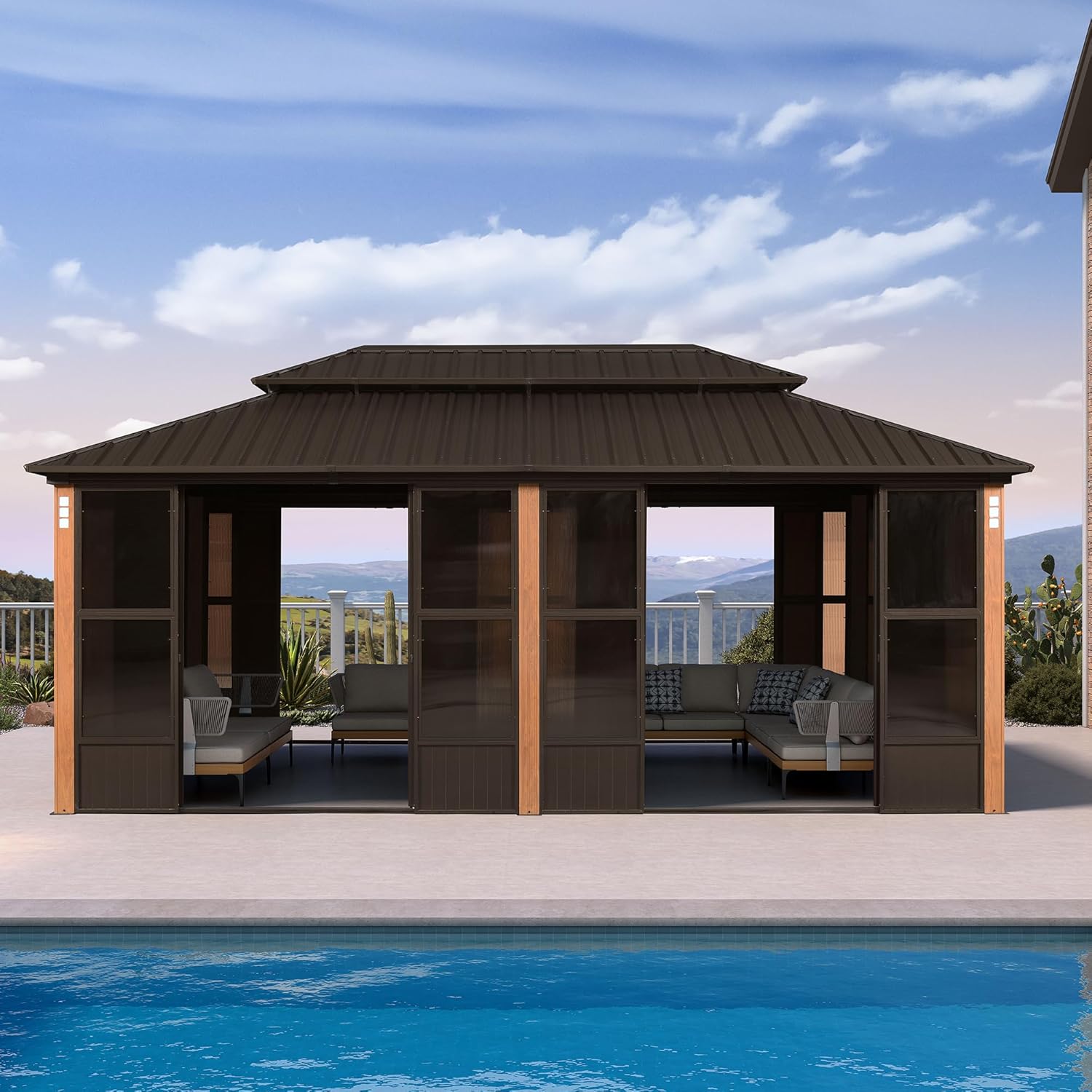
If you need a 12×20 space — which is large enough for a dining table for 8 or a full outdoor sofa set — and you live somewhere with real weather, the PURPLE LEAF is the best choice in the sub-$6,000 range. The vented roof alone makes it more comfortable on hot days than polycarbonate alternatives. I have seen it handle snow and wind that would flatten a cheaper unit. My PURPLE LEAF gazebo review pros cons list leans heavily to the pro side if the size fits your needs.
If you are on a tighter budget or want a simpler project, the Sojag 12×16 is worth considering. It is significantly cheaper, easier to assemble alone, and the polycarbonate roof is fine for mild climates. You give up the vented roof and the true 12×20 footprint. If you prioritize aesthetics and natural materials, the Yardistry meridian series looks better but demands annual staining. The PURPLE LEAF is the utility choice — it works hard, it does not need maintenance, but it will not win a beauty contest up close.
Clear a 14′ x 22′ area on a level surface before the boxes arrive. You need room to lay out and sort parts. Have a drill with hex bits, a socket set, a rubber mallet, and a level. The manual tells you to start with the frame base, but I recommend laying out the roof panels first and labeling them — the diagrams do not clearly indicate which panel goes where. Our biggest time saver was using a laser level to set all four corner posts exactly level before tightening any brackets. Do not skip the leveling step; it makes the door alignment much easier. Plan for a full day of work with two people.
At $5,049.99 (price at time of this review), the PURPLE LEAF 12×20 sits at the upper end of the consumer hardtop market. You can find cheaper gazebos, but none with this footprint and roof design. Compared to a custom-built timber structure, it is a bargain — but that is not the comparison most buyers make. Against other premium consumer gazebos, it offers good value for what you get: a large, well-ventilated, all-weather structure that requires minimal maintenance. The missing lighting and the need for aftermarket sealing are the two things that keep it from being great value. If those do not bother you, the value proposition is solid.
Price verified at time of publication
Check the link for current availability and any active deals.
The warranty covers the roof panels for 5 years and the frame and screws for 1 year. That is below average — many competitors offer 10-year frame warranties. The roof is the most expensive part to replace, so the 5-year coverage there is decent. However, the 1-year on the frame is short; if your aluminum shows corrosion after two years (unlikely but possible), you are on your own. Customer support is handled through Amazon messaging. I contacted them about the missing LED kit mounting points and got a response in 48 hours with a PDF showing where to install them. Not great, not terrible. The warranty explicitly excludes damage from improper installation, so keep your manual and document the build if you need to make a claim.
Over six months, the PURPLE LEAF hardtop gazebo proved structurally superior to any similarly priced unit I have used. The vented roof delivers on its promise, the frame resisted wind and snow without complaint, and the modular window system genuinely adapts to seasonal needs. The two consistent weaknesses are the assembly difficulty and the need to seal some roof seams yourself.
The PURPLE LEAF 12×20 hardtop gazebo is worth buying if you have the space, the patience for a challenging install, and the budget. It earns a 4 out of 5 from me — one point deducted for the inadequate instructions and the missing caulk. It is not perfect, but for a permanent outdoor structure at this price, it is the best option I have found. If you can handle the setup, you will be happy with it for years.
Did you also have trouble with the door track alignment? Or did your unit go together without issues? I would love to hear about your experience. Drop a comment below, and if you have found a workaround for the roof seam seepage, share it. Also, if you are still deciding, check the current price on Amazon — it fluctuates.
Yes, if you need the size and ventilation. You are paying for a thick aluminum frame and a dual-layer steel roof that actually works. The cheap plastic clips and missing items like anchors and lighting are annoyances, but they do not affect the core function. At $5,050, you get a genuinely weatherproof structure that will last a decade with minimal care.
The Sojag is easier to assemble and costs less, but its polycarbonate roof traps heat and its frame flexes more in wind. The PURPLE LEAF has a sturdier frame, a cooler interior, and larger footprint. If you live in a hot or windy area, the PURPLE LEAF is clearly better. If you have moderate weather and want to save $1,500, the Sojag is acceptable.
It is difficult. I have assembled several gazebos and this was the longest. The manual is vague on door tracks and roof panel order. If you have never built anything from a flat-pack, you will struggle. Hire a handyman or get an experienced friend. Expect 12-16 hours total.
You need concrete anchors or lag bolts for securing the base to your surface (I used these wedge anchors). You also need a drill with hex bits, a socket set, a level, a rubber mallet, exterior silicone caulk for the roof seams, and optionally the LED light kit. A laser level saves hours on alignment.
5 years on the roof panels, 1 year on everything else. Does not cover damage from improper installation, wind over 70 mph, or normal wear on gaskets. Support is through Amazon, response was 48 hours for me. They sent a PDF. It is functional but not outstanding.
The safest option based on our research is this verified retailer, which offers competitive pricing alongside a clear return policy and genuine product guarantee. Amazon is the only authorized online seller; buying direct from PURPLE LEAF’s website is also possible but often the same price.
PURPLE LEAF recommends a concrete, paver, or wood deck foundation. Installing on grass will cause the frame to settle unevenly, which will bind the doors and compromise the roof’s waterproofing. If you must use gravel, dig down, add a compacted base, and lay patio stones at the post points.
A louvered pergola lets you adjust opening on top, which is great for partial sun control. But a louvered roof will always leak some water when closed. The PURPLE LEAF’s fixed vented roof stays dry and still provides airflow. For rain-prone areas, a hardtop with a vent is better than any louvered system for staying dry.
Reviews You Can Actually Use
We test products so you do not have to guess. No sponsored rankings. No filler content. Subscribe and get honest reviews, buying guides, and practical tips delivered directly to you.