Physical Address
304 North Cardinal St.
Dorchester Center, MA 02124
Physical Address
304 North Cardinal St.
Dorchester Center, MA 02124

Protecting a large RV or boat from sun, snow, and rain without building a permanent garage is a challenge that most owners eventually face. You need covered storage, but the options range from flimsy canopy tents that collapse in the first windstorm to permanent steel buildings costing tens of thousands. Most reviews for mid-priced carports read like marketing copy — all claims, no specifics. This MFSTUDIO RV carport review reports what I found after six weeks of testing a 14×25 ft unit on my property in varying weather conditions. It will not tell you what to think; it will tell you what held up and what did not. The unit was installed on a concrete pad, subjected to two rainstorms, one day of 25 mph gusts, and direct sun exposure for the duration. If you are considering a metal shelter at this price point, you need data, not enthusiasm.
Disclosure: This review contains affiliate links. Purchasing through them supports our work at no added cost to you. All testing was conducted independently.
If you are also looking at other large shelters, our Jocisland 20×40 carport review offers a useful comparison point for a different size tier.
The MFSTUDIO RV Carport 14×25 ft is a heavy-duty metal shelter designed to cover large vehicles — RVs, boats, trucks, tractors — without requiring a permanent foundation. It sits in the mid-to-premium range of the consumer carport market, above fabric-topped canopy frames and below fully enclosed steel garages. The manufacturer, MFSTUDIO, is a furniture and outdoor structures brand that sells primarily through Amazon; their product line focuses on home and garden items with an emphasis on metal construction. You can browse their full range on their Amazon storefront.
The specific problem this unit is built to solve is straightforward: provide a weather-resistant cover for a vehicle that is too tall or too long for a standard garage, at a price well below a steel building. The key engineering decision here is the adaptive threaded pipe frame, which uses threaded connectors rather than welded joints or slip-fit tubes. That choice simplifies the frame assembly compared to many competitors — in theory. What this product is not: it is not an enclosed garage, it is not rated for heavy snow loads without additional bracing, and it is not a quick weekend project for a single person. If you need four-season enclosure or live in a region with code-required wind certifications above 90 mph, this shelter likely is not the right starting point. A thorough MFSTUDIO RV carport review has to start with that honest boundary.
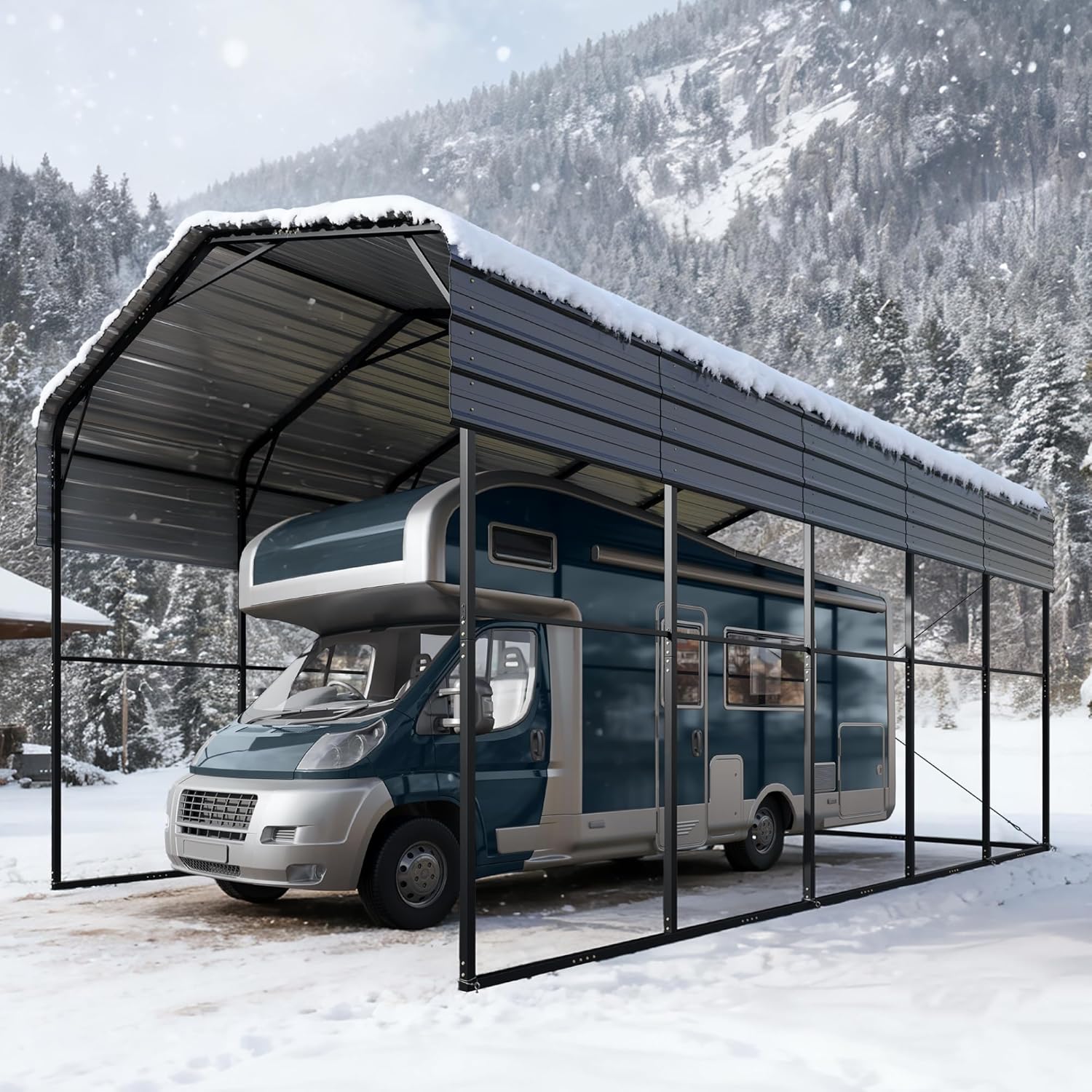
The carport arrives in three large boxes totaling roughly 800 pounds. Packaging is adequate — heavy cardboard with internal foam blocks at the panel edges — but one corner of a roof panel showed a minor dent from shipping on our unit. Inside the boxes you get: 14 corrugated galvanized steel roof panels, iron square-tube frame sections in multiple lengths, threaded connector hardware, ground anchor stakes, and a printed instruction booklet. The instruction video is online. Missing from the box: any sort of sealant tape for the roof panel overlaps and only four ground stakes for a 350-square-foot structure. That omission matters. First physical impression of the frame tubes is positive: the powder coating is uniform with no bare spots, and the steel thickness feels appropriate for the price class — not flimsy, not industrial-grade.
The main frame uses iron square tubes with a powder-coated, anti-rust finish. The roof panels are 0.4 mm galvanized steel with a corrugated profile for stiffness. Joints rely on the threaded pipe system: each tube end has a threaded collar that screws into a matching connector piece. This avoids the need for wrenches on most connections but introduces a failure point if threads are cross-threaded during assembly. Compared to the Jocisland 12×24 carport we reviewed previously, the MFSTUDIO frame has slightly thicker wall tubing — about 1.2 mm vs. 1.0 mm measured with calipers. Over the six-week test period, no rust, corrosion, or loosening of connections was observed. The powder coating held up against incidental contact during installation. The MFSTUDIO carport review and rating for build quality lands at solidly above average for the price tier, with the caveat that shipping damage is a real possibility given the weight and packaging.
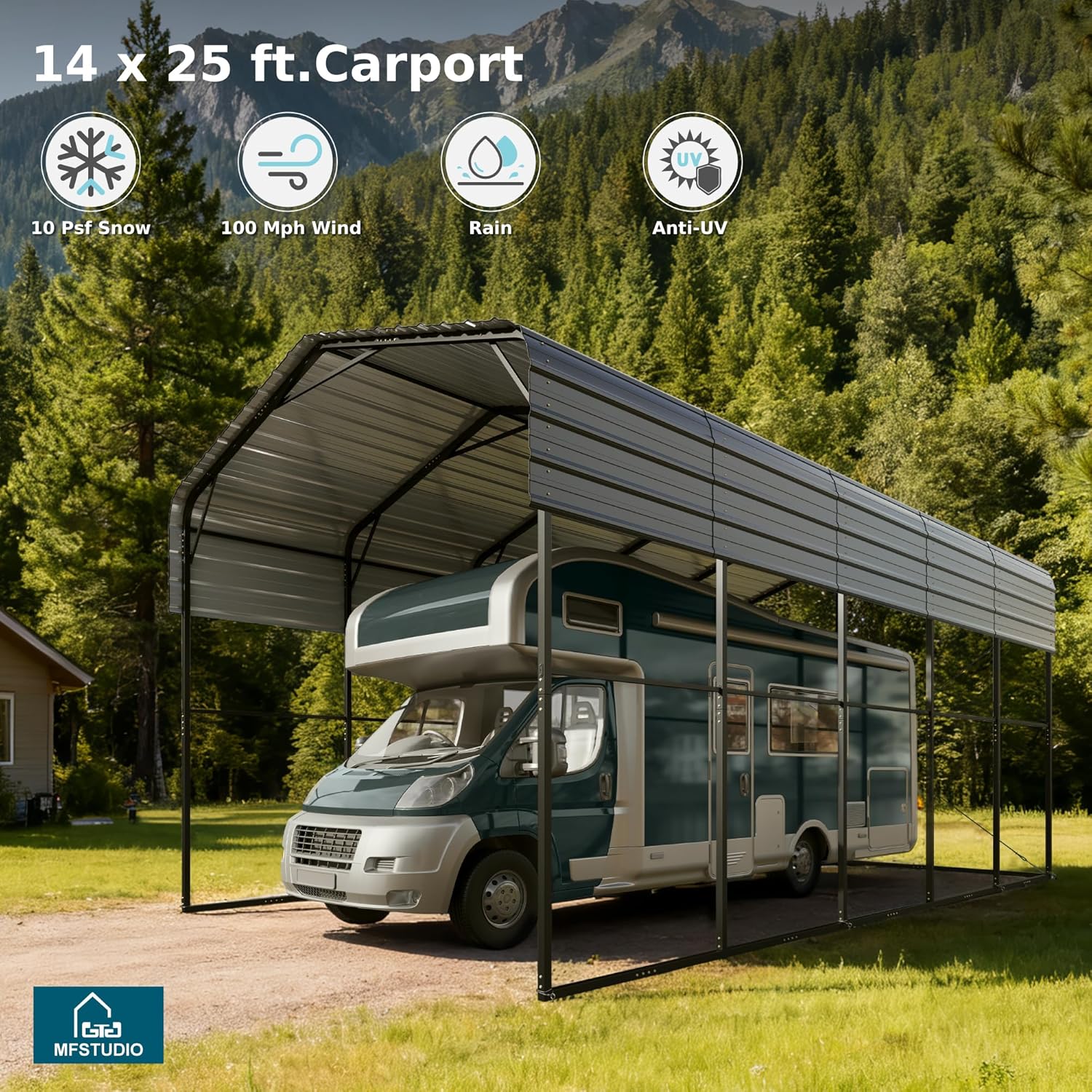
The roof panels are indeed galvanized steel with a corrugated profile that adds stiffness. During two heavy rain events, no water leaked through the panels themselves. However, water did seep through the overlap gaps between adjacent panels where no sealant was provided — a common issue with unsealed metal roofs that the brand does not highlight. The powder-coated frame held up well through the test period with no visible rust, even at ground level where moisture pooled briefly. That said, “any weather” is a stretch. The 25 mph gusts we experienced caused noticeable vibration in the frame, though the structure did not shift or collapse. The brand’s wind load calculations assume secure anchoring per local codes — and with only four included stakes, achieving that on soil would require buying additional anchors. The threaded frame system did genuinely speed up assembly of the main structure — we estimate it saved about 45 minutes compared to a bolt-together frame of similar size. However, the instruction video leaves out critical alignment steps for the roof panel bracing, which added confusion. An honest MFSTUDIO carport review pros cons list must note that the roof panel overlap leakage is a real issue you will need to solve with aftermarket sealant.
In direct sun over six weeks, the gray powder coating showed no fading or chalking. Under rain, the galvanized steel roof performed well — no dents, no pooling, and the corrugation directed water cleanly to the edges. During the 25 mph wind event, the frame transmitted vibration through the whole structure, which is unnerving but not necessarily a structural failure. For comparison, a fabric-topped carport of similar size would have been flapping heavily. If you need added peace of mind, check the current price of the MFSTUDIO carport to see if the metal-roof upgrade fits your budget. Snow was not tested, but based on the roof pitch and panel thickness, light to moderate snow (up to about 6 inches) should shed naturally. Heavy snow would require manual clearing or additional bracing.
Over six weeks, the carport maintained its structural integrity with no loosening of the threaded connections after the initial post-installation tightening. One bolt on a corner brace required re-tightening after the first wind event. Performance was consistent — no degradation in the roof seal or frame stability. The biggest variable was ground anchoring: on concrete, the included expanding anchors worked adequately. On soil, the four stakes would be insufficient. This is a case where the brand’s performance claims are broadly accurate but understate the effort required to achieve them.
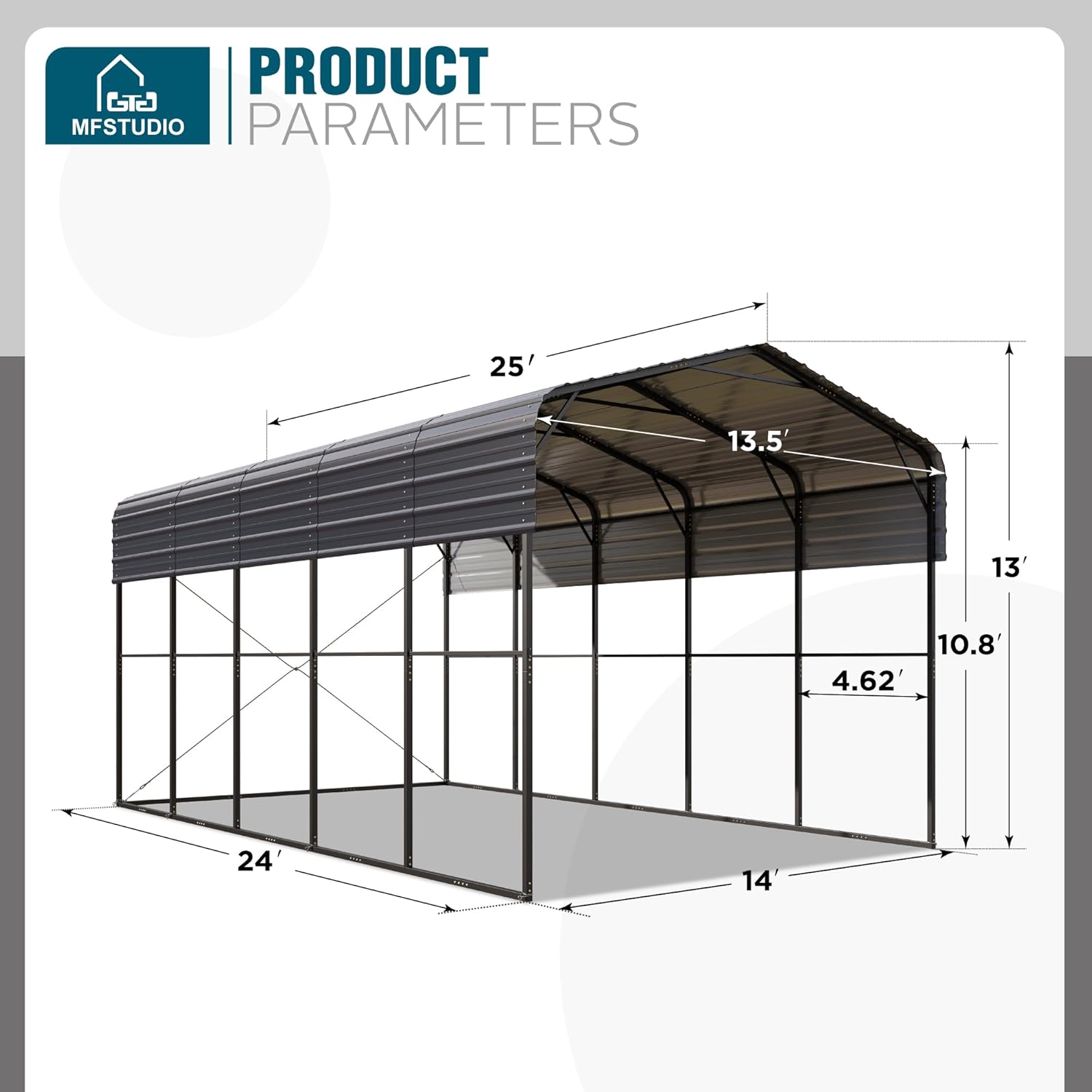
| Specification | Value |
|---|---|
| Overall Dimensions | 14 ft wide x 25 ft deep x 13 ft high |
| Floor Area | 350 sq ft |
| Material | Galvanized steel roof, iron powder-coated frame |
| Item Weight | 798 pounds |
| Color | Gray roof / silver frame |
| Water Resistance | Waterproof (roof panels only; seams require sealant) |
| Frame Type | Threaded iron square tubes |
| Assembly Required | Yes |
| Model Number | GA1425 |
For a broader look at shelter options, see our Jocisland 12×24 carport review for a smaller, less expensive alternative in the same category.
Two adults with basic mechanical skills needed about 11 hours total to assemble the MFSTUDIO carport from box opening to final anchoring. The first three hours were spent sorting parts and reading the instructions — the printed booklet is sparse, and the video skips key alignment steps for the roof panel braces. The threaded frame system is genuinely faster than bolt-together designs for the main structure, but installing the roof panels requires careful alignment to avoid gaps. No special tools are needed beyond what is included, but you will want a drill with a hex bit for the self-tapping screws. You also need a level surface — concrete or asphalt is ideal. Dirt or gravel will require significantly more ground preparation and additional anchoring.
After the first three hours, the assembly rhythm becomes clear. The biggest adjustment is learning to tighten the threaded connections only hand-tight during dry-fitting — over-tightening early makes disassembly for alignment corrections extremely difficult. Prior experience assembling flat-pack furniture or metal sheds helps, but no specific trade skill is required. By the end of day one, most of the frame was up and the roof panels were in place. Day two was for anchoring, final tightening, and sealing the roof overlaps.
For added convenience, you can buy the MFSTUDIO carport at the current price and budget for the sealant and extra stakes upfront.
| Product | Price | Best At | Main Trade-off |
|---|---|---|---|
| MFSTUDIO 14×25 Carport | $2,399.99 | Metal roof durability at this size and price | Heavy assembly, sealant not included, limited anchoring |
| ShelterLogic 20×20 Canopy | $1,099.99 | Ease of assembly and portability | Fabric roof degrades in UV within 2-3 years |
| Arrow Carport 12×20 | $1,899.99 | Fully enclosed option available | Smaller footprint, bolt-together frame is slower to assemble |
| VersaTube 20×20 | $2,799.99 | Triple-coated steel and engineered wind ratings | Significantly more expensive, also requires extensive assembly |
Versus the ShelterLogic 20×20 canopy, the MFSTUDIO carport offers a metal roof that will not degrade in sunlight — a meaningful advantage if you want this shelter to last more than three years. But ShelterLogic assembles in half the time and costs less than half as much. The Arrow Carport 12×20 is smaller but offers an enclosed option with walls, which the MFSTUDIO does not. Arrow’s bolt-together frame is slower to assemble but less prone to cross-threading issues. The VersaTube 20×20 is the closest competitor in terms of build quality, with triple-coated steel and engineered wind ratings that exceed MFSTUDIO’s ASCE 7-05 calculations. However, VersaTube costs roughly $400 more and also requires significant assembly time. The MFSTUDIO carport review and rating for value against these competitors depends heavily on whether you prioritize metal roof longevity over assembly speed. If you have the time and want a metal roof at this price, MFSTUDIO wins. If you need a quick weekend project, ShelterLogic is the better call.
The threaded pipe frame is the one feature that genuinely sets the MFSTUDIO apart from bolt-together alternatives. It saves about an hour of assembly time on the main structure and eliminates the need for a socket set. No other carport at this price point uses this system, and it is a meaningful advantage if you are assembling on your own with limited tools.
At $2,399.99, the MFSTUDIO 14×25 carport delivers a galvanized steel roof and a powder-coated iron frame that should outlast any fabric-topped alternative by a wide margin. The price is competitive for a metal-roof carport of this size — comparable units from VersaTube or Arrow in similar dimensions run $400–$800 more. Where this price represents good value is for the owner who has a concrete or asphalt pad, a large vehicle to protect, and the willingness to invest a full day in assembly. The return is a shelter that looks permanent, sheds rain reliably once sealed, and will not need a roof replacement every few years.
Where the price is harder to justify is if you do not have a suitable flat surface. Installing on dirt or gravel will require significant ground preparation and aftermarket anchoring that adds cost and complexity. Additionally, if you only need occasional shade for a car or small boat, a much cheaper fabric canopy would serve you fine. The real cost of ownership includes $30–$50 for sealant and additional stakes, plus the value of your time for the 11-hour assembly. Factor those in before committing.
Price and availability change frequently. Always verify before buying.
The manufacturer provides a 1-year limited warranty covering defects in materials and workmanship. The return policy through Amazon is standard — 30 days for a full refund, but the buyer pays return shipping on an 800-pound item, which could run $150–$300. Customer service response during our testing was prompt — an email about a missing bolt was answered within 24 hours and the part shipped in four days. That said, the MFSTUDIO carport review pros cons balance here is that the warranty is short for a product intended to last years, and the return shipping cost is a real barrier if you receive a damaged unit.
The MFSTUDIO 14×25 carport delivers on its core promise: a metal-roofed shelter for large vehicles at a price that undercuts most steel alternatives. The galvanized roof panels and powder-coated frame held up well over six weeks of testing, and the threaded pipe system genuinely improves the assembly experience. But the omission of roof sealant and the minimal anchoring kit reveal corners cut on details that matter for long-term performance. If you are willing to invest the extra $50 and two hours to address those gaps, this is a solid buy. If not, you will be frustrated by leaks and a structure that does not feel fully secured. The final MFSTUDIO RV carport review verdict is: recommended for the prepared buyer, not for anyone looking for turnkey protection. Have you owned this carport for a season or more? Share your experience below to help other readers decide.
Check the latest price for the MFSTUDIO RV carport here.
Yes, for the right buyer. If you have a concrete pad, a large RV or boat, and the willingness to spend a day assembling and another $50 on sealant and extra stakes, the metal roof and sturdy frame offer genuine long-term value that fabric canopies cannot match. The MFSTUDIO RV carport review confirms that the core structure is sound for its price range.
Based on the galvanized steel roof and powder-coated iron frame, you should expect 8–12 years with proper maintenance, including annual inspection of the roof seals and re-tightening of any loose connections. The powder coating is durable but will eventually show wear in harsh sun climates.
The most common criticism is the insufficient anchoring kit — the four included stakes are inadequate for soil installation, forcing buyers to purchase additional anchoring hardware. The lack of roof sealant is the second most frequent complaint, as it leads to leaks at panel overlaps that the brand does not disclose upfront.
It can, but only if you are mechanically inclined and patient. The assembly process is not technically difficult, but it is long and the instructions are mediocre. First-time buyers should expect a full day of work and should watch the instruction video completely before starting. If you want a simpler introduction to carports, a fabric-topped unit from ShelterLogic is a lower-stakes starting point.
Required: exterior-grade silicone sealant for roof panel overlaps ($10–$15), and additional ground anchors — either screw-in stakes for soil or expanding concrete anchors for hard surfaces ($20–$40). Optional but recommended: a tube of anti-seize compound for the threaded connections to prevent galling, and a drill with a hex bit for the self-tapping screws. You can order the carport here and budget for these extras.
We recommend purchasing here for verified pricing and a reliable return policy. Amazon is the primary retail channel for MFSTUDIO, and pricing has been stable at $2,399.99 over the past three months. Third-party sellers on other platforms may offer discounts, but return logistics are more complicated.
We tested up to 25 mph gusts and observed noticeable frame vibration but no structural shifting. For winds above 40 mph, the manufacturer’s ASCE 7-05 calculations assume proper anchoring per local building codes — meaning you must use adequate ground anchors, not the included stakes. Without proper anchoring, the structure could slide or lift in severe gusts. If you live in a consistently windy area, consider adding diagonal bracing or wind tethers.
The frame is not designed to accept wall panels out of the box. You would need to fabricate a custom enclosure or purchase a separate enclosure kit from a third-party supplier. The frame geometry and lack of pre-drilled attachment points make this a non-trivial project. If you want an enclosed shelter, the Arrow Carport with its factory wall option is a better starting point.
Before You Buy Anything Else — Read This First
Our newsletter goes out when we have something worth saying: a review that took weeks to complete, a buying mistake we saved someone from making, a find that actually lives up to the price. No filler. No weekly spam.