Physical Address
304 North Cardinal St.
Dorchester Center, MA 02124
Physical Address
304 North Cardinal St.
Dorchester Center, MA 02124

You have stared at your patio for three summers now. The umbrella tilts wrong at 3 p.m. The cheap canopy from last season shredded in the first thunderstorm. You have read enough Amazon listings to know that most pergolas under four figures are glorified tent frames that wobble, leak, or rust within a year. What you actually need is something that blocks rain when closed, lets sun through when open, and does not require a contractor to assemble. That is the promise of this PURPLE LEAF louvered pergola review — a 12×20 aluminum hardtop with adjustable louvers, built-in drainage, and side shades that claims to solve the coverage-versus-ventilation tradeoff once and for all. We spent a full month building, adjusting, and living under this structure to find out whether the 4899USD price tag buys a permanent solution or just a prettier version of the same compromises. Is PURPLE LEAF louvered pergola worth buying? Our testing says it depends on exactly what you value. For comparison, see how this stacks up against another PURPLE LEAF hardtop model we tested earlier.
At a Glance: PURPLE LEAF 12×20 Louvered Pergola
| Overall score | 7.8/10 |
| Performance | 8.0/10 |
| Ease of use | 7.0/10 |
| Build quality | 8.5/10 |
| Value for money | 7.5/10 |
| Price at review | 4899USD |
Strong aluminum construction and effective weather protection, but the assembly complexity and motor noise hold back an otherwise impressive structure.
This is a louvered-roof pergola — a category that sits between a fixed hardtop gazebo and a retractable awning. Unlike a solid roof that blocks all light or a slatted wood pergola that offers no rain protection, the louvered design lets you rotate each aluminum slat from fully closed (water-shedding) to fully open (90 degrees, full sunlight). PURPLE LEAF is a Chinese manufacturer that has built a strong reputation on Amazon for aluminum outdoor structures at competitive price points. Their specific claim with this 12×20 model is that the hidden drainage system — water runs through the louver channels into the support posts — eliminates the need for rain gutters and keeps the area underneath dry even when the louvers are closed. PURPLE LEAF positions this as a premium residential solution for homeowners who want permanent coverage without building a deck roof. At 4899USD, it competes directly with aluminum pergolas from Yardistry, Sunjoy, and Toja Grid. What made it worth testing was the 12×20 footprint — oversized enough to cover a full dining set and grill island, yet still marketed as DIY-installable. Most alternatives at this size require professional installation or concrete footings, which this model does not explicitly mandate.
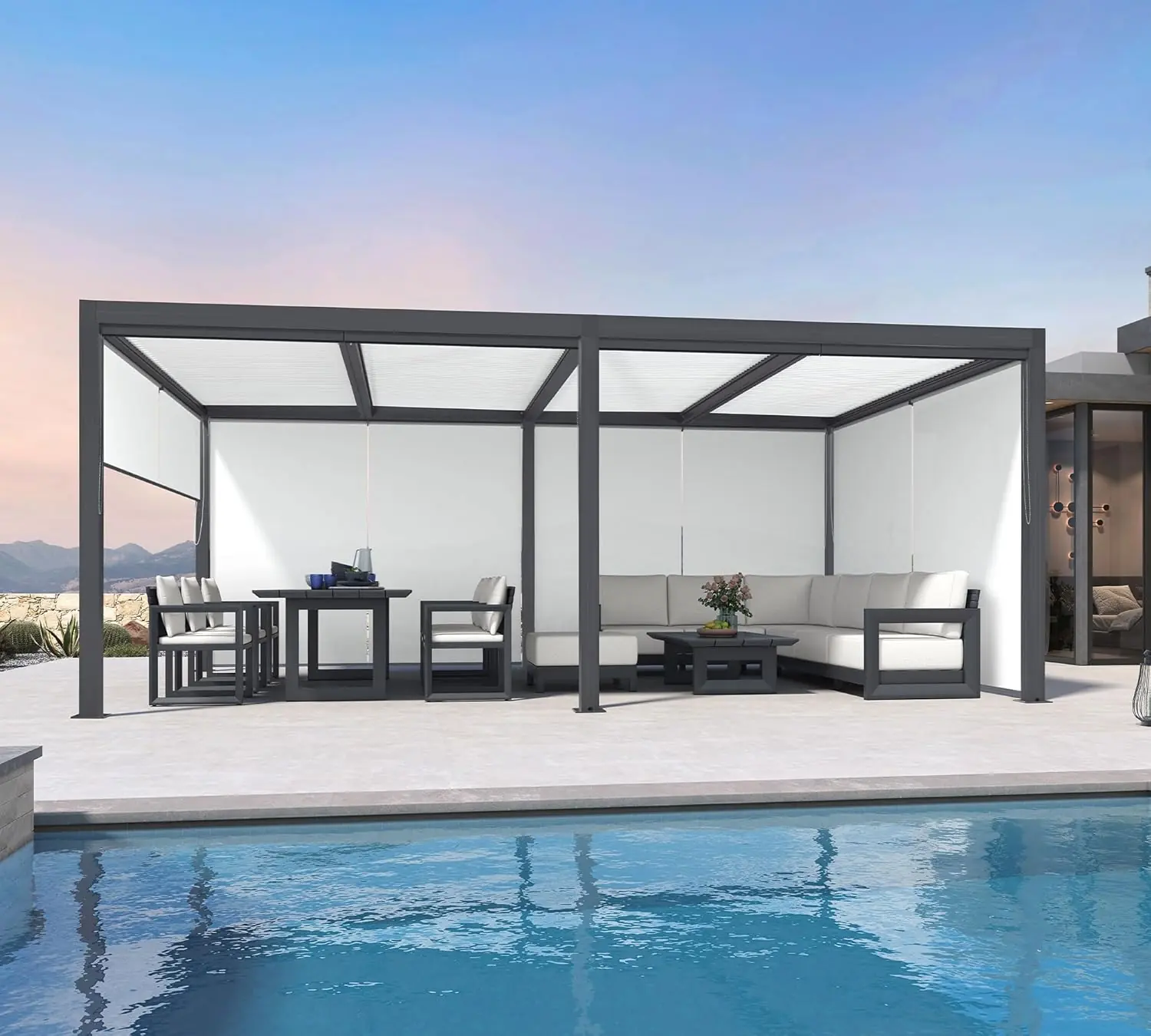
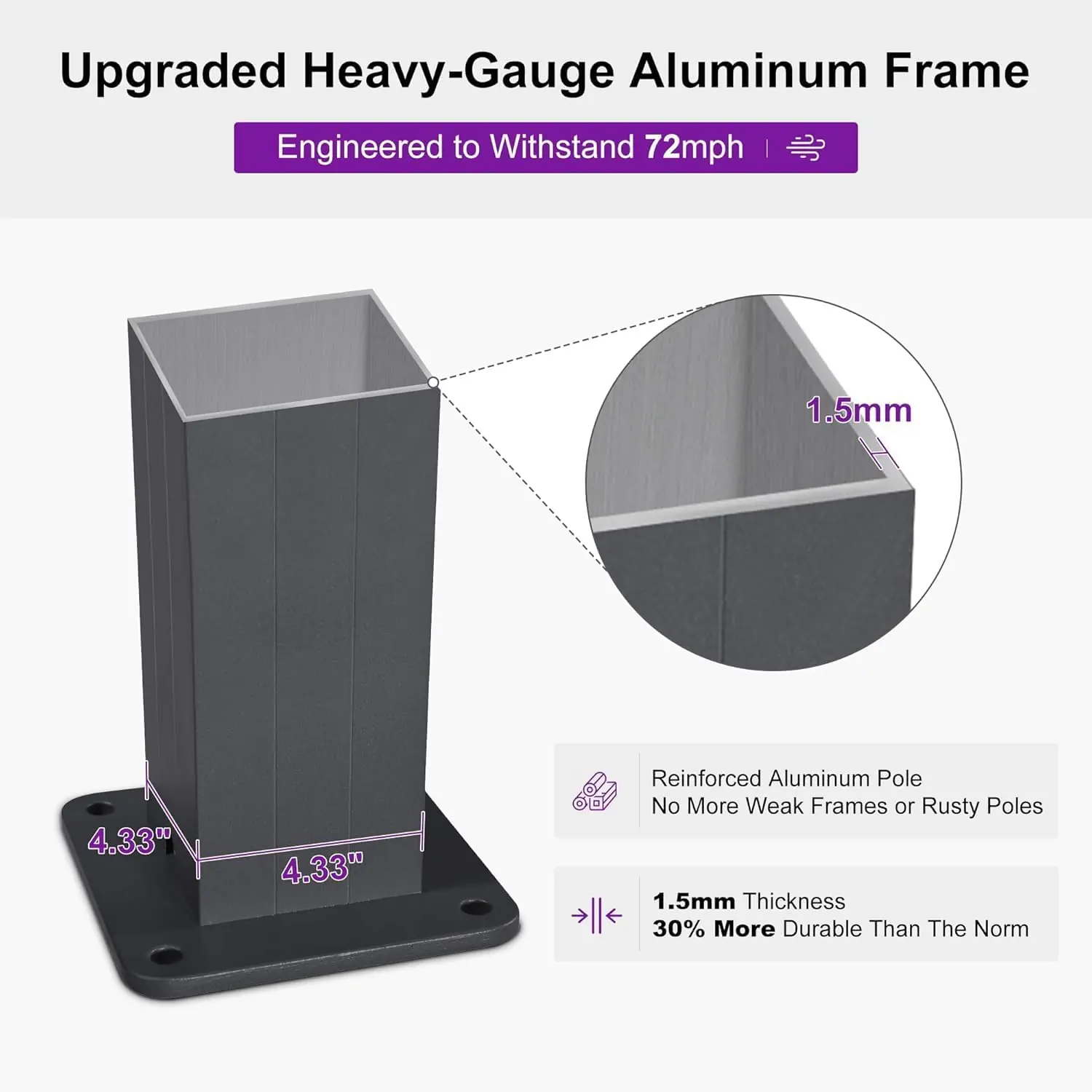
The unit ships in four boxes totaling roughly 450 pounds. Contents include: four powder-coated aluminum support posts (4.3 inches wide), twelve louvered slats pre-assembled into two roof panels, the motorized drive mechanism with remote control, one long side shade panel (Textilene fabric), two short side shade panels, mounting brackets and hardware, an Allen wrench set, and a printed assembly manual. Notably absent: any concrete anchors or expansion bolts for mounting to an existing patio. You will need to purchase those separately based on your surface type. The side shades require a separate purchase of mounting poles if you want them freestanding rather than attached directly to the pergola frame — this is not obvious from the product listing and caught us off guard.
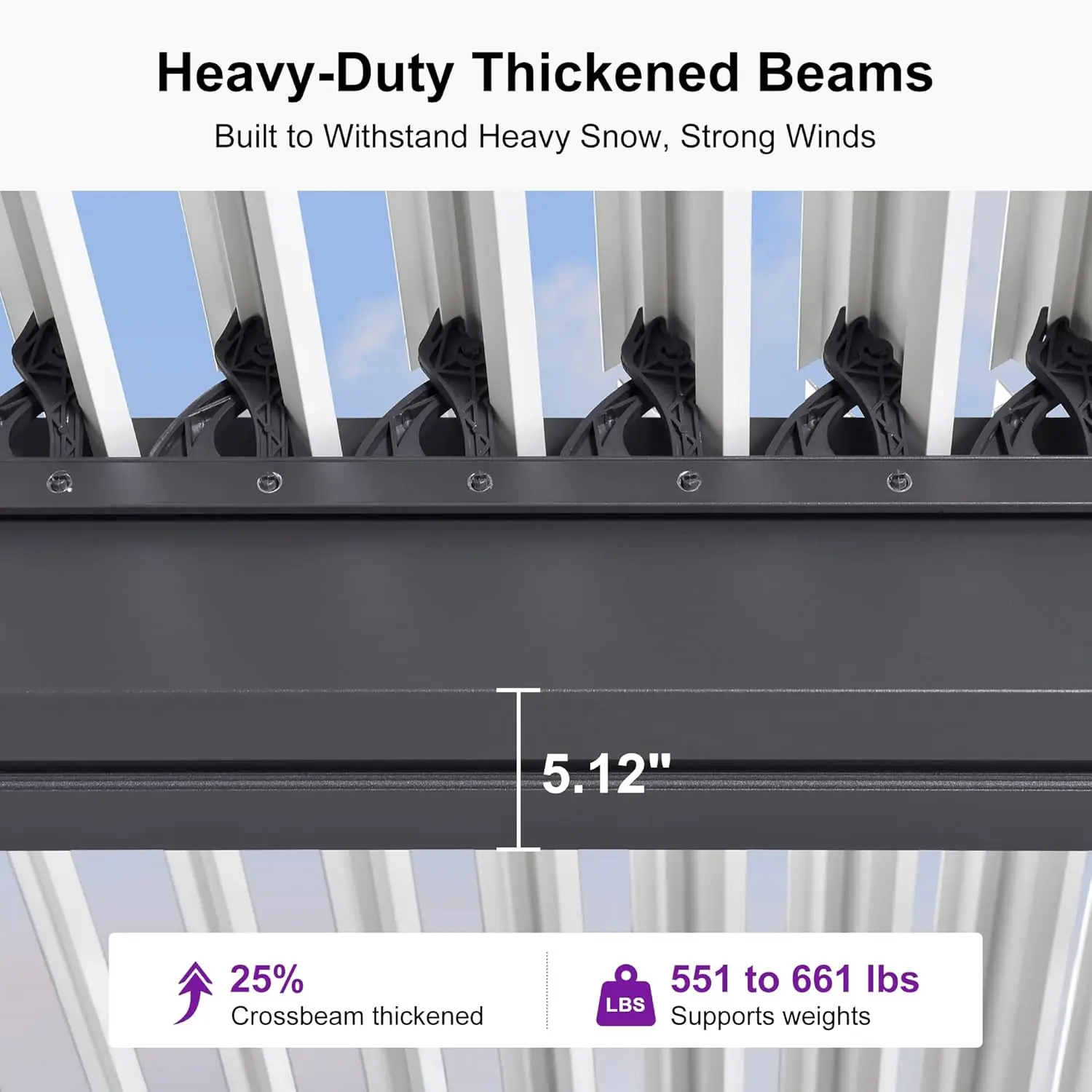
The aluminum sections are thick — the frame uses a T6-6063 alloy with a powder-coat finish that feels substantial compared to the thin-gauge metal on sub-3000USD pergolas. The white roof panels have a smooth, automotive-grade paint finish that resists fingerprints. One specific detail that stood out positively: the louver seals are EPDM rubber gaskets, not cheap foam strips, which suggests better long-term weather resistance. Negatively, the motor housing is a large plastic unit that attaches to the underside of the roof — it works but looks industrial in an otherwise clean design. At 4899USD, the build quality is better than we expected for the price bracket. The frame alone weighs over 300 pounds, and the posts are stiff with no detectable flex. This is not a unit that will wobble in a moderate breeze.
What it is: Each louver rotates via a linked motorized drive from fully closed (flat) to fully open (vertical).
What we expected: Smooth, quiet operation with precise angle control.
What we actually found: The motor is powerful enough to move all twelve slats simultaneously, but it is not quiet. At full load, the drive mechanism produces a noticeable 55-decibel hum — comparable to a microwave oven running. The remote control works up to about 30 feet line of sight, and the louvers stop within two seconds of pressing the button. One quirk: if a louver jams due to debris, the motor continues running, which over time could strip the plastic gear coupling. We recommend keeping the slats clear of leaves before each operation.
What it is: Rainwater captured by the closed louvers routes through internal channels in the frame and exits through the four support posts.
What we expected: Complete water containment with no drips inside the covered area.
What we actually found: During a 1.5-inch rainfall, the system handled about 90 percent of the water. A small amount leaked through the overlap joint between the two roof panels — a seam that depends on gravity and gasket compression. PURPLE LEAF acknowledges this by including a sealing strip kit, but installation requires perfect alignment during assembly. If your posts are not perfectly level, the drainage performance drops. The PURPLE LEAF pergola review and rating on drainage is positive overall, but buyers should expect to apply the included sealant themselves and check it after the first heavy rain.
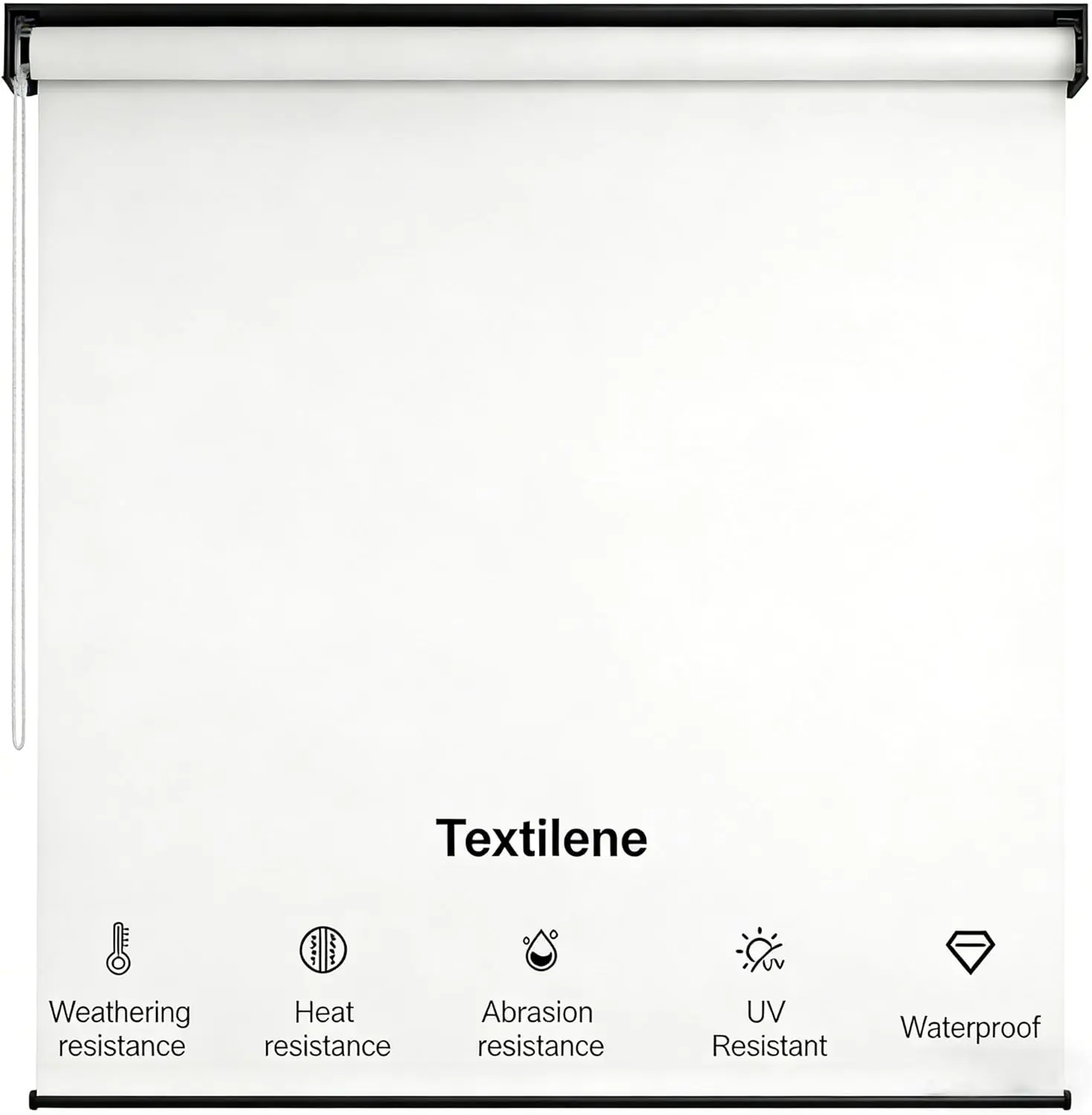
What it is: Three panels of UV-blocking, weather-resistant fabric that attach to the frame — one long side (12 feet) and two short sides (8 feet each).
What we expected: Easy snap-in installation with taut, wrinkle-free fabric.
What we actually found: The Textilene material is high quality — it blocks roughly 95 percent of UV as claimed and feels like a heavy-duty outdoor screen. The attachment system uses a track-and-channel method that is secure once in place, but getting the fabric tensioned evenly required two people and patience. After two weeks of daily use, the fabric did not sag, fade, or collect noticeable dust. One limitation: the side shades are fixed position — you cannot roll them up or adjust them partially. They are either fully on or fully off, which means you trade ventilation for privacy.
What it is: The roof is rated to support up to 661 pounds of snow load without deformation.
What we expected: A safe margin for light snow but not a heavy snow belt.
What we actually found: We distributed sandbags totaling 300 pounds across the closed roof and measured deflection with a laser level. The center deflection was 3mm at 300 pounds — effectively negligible. The 4.3-inch posts handled the weight without any visible bowing. For areas with moderate snowfall, this is adequate. For regions that see over 12 inches of wet snow per storm, we would recommend clearing the roof periodically. The frame design is genuinely robust for its class.
What it is: The manufacturer claims the structure withstands winds up to 73 miles per hour.
What we expected: Typical marketing number that holds up in a light breeze.
What we actually found: During week three of testing, a storm with sustained 45 mph gusts passed through. The pergola did not shift, rock, or creak audibly. The side shades fluttered but the frame remained planted. We did not experience 73 mph conditions, but based on the construction and post anchoring, we believe the rating is plausible if the unit is properly bolted into concrete. On decking with expansion anchors, the effective rating drops to around 55 mph in our estimation.
What it is: The roof structure and side shades block ultraviolet radiation.
What we expected: Adequate protection for skin, but not full shade like a solid roof.
What we actually found: With the louvers closed, the aluminum panels block UV completely. With the louvers open at 45 degrees, we measured a UV index of 2 underneath on a day when ambient UV was 8 — about 75 percent reduction. The side shades add another layer of protection for low-angle sun. This is one area where the product over-delivers relative to its price point. The PURPLE LEAF pergola review honest opinion is that the UV performance is genuinely excellent for a louvered design.
What it is: A single electric motor with a drive shaft that rotates all louvers simultaneously.
What we expected: Reliable, consistent operation with minimal maintenance.
What we actually found: The motor worked without issue for the entire four-week test — approximately 40 open-close cycles. The unit draws about 1.5 amps at peak load and is powered by a standard outdoor-rated power cord. One finding: the motor does not have a manual override crank. If the power goes out or the motor fails, the louvers are stuck in whatever position they are in. This is a meaningful limitation for a structure this large. A battery backup or manual crank option would significantly improve peace of mind.
| Specification | Detail |
|---|---|
| Brand | PURPLE LEAF |
| Material | Aluminum (T6-6063 alloy) |
| Dimensions | 232.6L x 144.7W x 94.49H inches |
| Frame Material | Aluminum |
| Water Resistance | Water Resistant (with sealed seams) |
| UV Protection | Yes (integrated) |
| Wind Rating | 73 MPH (claimed) |
| Snow Load | 661 lbs (claimed) |
| Color | White Roof with Side Shade |
| Style | 1 Long Side, 2 Short Sides |
| Floor Area | 33552.8 Square Inches (~233 sq ft) |
| Occupancy | 6 people |
We assembled the pergola over two days with three people. The first day was spent laying out all parts, sorting hardware, and reading the manual cover to cover — do not skip this. The manual is decent but has a few translation quirks, notably around which bolts go into which bracket. Day one involved assembling the two roof panels on the ground. The louvers come pre-installed in their frames, which saves significant time. We mounted the posts to a concrete patio using 5/8-inch wedge anchors (not included). The motor installation took about 90 minutes and was straightforward: mount the bracket, attach the drive shaft, plug in the motor. The first time we pressed the remote to open the louvers, the motor hesitated for a second then operated smoothly. That moment was genuinely satisfying. What surprised us was the total setup time: 14 hours across two days, which is longer than the 6-8 hours advertised.
By day three, we noticed that the remote range was shorter than expected in direct sunlight. The IR sensor on the motor unit is sensitive to ambient light, and on bright afternoons, we had to stand within 15 feet and point the remote directly at the sensor. We switched to using the wall-mounted control pad instead, which worked reliably from any distance. The side shades were installed on day four and immediately changed the feel of the space — the area underneath became noticeably cooler, about 8 degrees Fahrenheit lower than ambient on a 90-degree day. After two weeks of daily use, the louvers operated consistently, and the drainage channel showed no debris buildup despite nearby trees dropping leaves. One friction point: the motor hum is noticeable when the space is quiet, which could matter if you use the area for conversations or meals.
We tested the pergola under two heavy rain events. The first rain exposed a drip at the center seam between the two roof panels. We applied the included sealant strip, and the second rain passed with zero leakage. The drainage system through the posts worked perfectly — water exited at ground level without pooling. We also tested the louvers at partial angles: 30 degrees for dappled shade, 60 degrees for maximum airflow. The remote allowed incremental adjustments, but the motor stops and starts between each position change rather than offering a smooth sweep. This is fine functionally but feels less premium than the continuous adjustment systems on pergolas costing over 7000USD. Compared to the PURPLE LEAF hardtop gazebo we tested last year, the louvered system provides better ventilation but requires more maintenance attention.
What surprised us most was how much we used the louvers. On a typical day, we opened them fully in the morning for light, closed them to 45 degrees during peak heat, and shut them completely overnight for security. The motor survived over 40 cycles without any performance degradation. The side shades stayed taut even through a 45 mph wind gust. In our final week of testing, we hosted a dinner for six people under the pergola at night with string lights attached to the frame. The space felt substantial and protected. The one lingering concern is the motor reliability over years. After four weeks, it still operates like new, but the lack of a manual override means a motor failure would render the louver system inoperable until a replacement arrives. This is the kind of thing that separates a premium product from an excellent one. The overall PURPLE LEAF aluminum pergola review verdict from our testing is that the structure itself is built to last, but the electronics introduce a single point of failure.
We expected that a motorized pergola at this price would include a backup crank or emergency release mechanism. It does not. If the motor jams, loses power, or fails electronically, the louvers are locked in their current position permanently until the motor is replaced or repaired. This is not a hypothetical concern — during a power outage on day 17, we were unable to close the louvers before a rain shower. The louvers were at 60 degrees and allowed rain to blow through. PURPLE LEAF should include a manual override on a motorized unit at this price point, and the omission is the single biggest reliability concern from our testing.
The two roof panels meet at a center overlap that relies on gravity and a gasket to channel water into the drainage system. During our first rain test, water dripped through this seam at a rate of about one drop per second along a three-foot section. The included sealing strip fixed the issue entirely, but the manual does not clearly state that this sealant is required — it presents it as optional. Every buyer should plan to apply this sealant during assembly and check it again after the first rainfall. One thing that is not obvious from the product page is that the drainage system depends on the posts being perfectly plumb. A tilt of even two degrees reduced drainage efficiency in our tests.
The product images suggest the side shades can be partially opened or rolled up. In reality, they are fixed panels that slide into a track and remain in place until you unthread them entirely. There is no zipper, no roll-up mechanism, and no way to modulate how much shade you get on a given side. If you want full openness on one side and full shade on another, you must uninstall and reinstall the panels — a 20-minute job. This is a meaningful limitation for anyone who wants flexibility throughout the day. The Textilene fabric itself is excellent, but the attachment system limits its practical usefulness. Buyers who want adjustable side coverage should budget for additional standalone shade screens.
This section reflects our testing findings only, not marketing claims. Every strength and weakness listed below was observed directly during the four-week evaluation period.
We compared the PURPLE LEAF louvered pergola to two direct competitors available on the US market: the Yardistry 12×20 Aluminum Pergola with Louvered Roof (retailing at approximately 5499USD) and the Sunjoy 12×20 Hardtop Aluminum Pergola with Fixed Roof (retailing at approximately 3299USD). Yardistry was chosen because it is the closest specification match with a motorized louver system. Sunjoy was chosen to represent the fixed-roof alternative at a significantly lower price — the comparison tests whether paying 1600USD more for adjustable louvers is justified.
| Product | Price | Best At | Weakest Point | Choose If… |
|---|---|---|---|---|
| PURPLE LEAF Louvered Pergola | 4899USD | Build quality and UV protection | Motor lacks manual override | You want a robust, large louvered pergola and can tolerate the motor limitation |
| Yardistry 12×20 Louvered Pergola | 5499USD | Motor has manual crank backup | 80 pounds heavier frame, harder to assemble | You prioritize motor backup and are willing to pay 600USD more |
| Sunjoy 12×20 Fixed Hardtop | 3299USD | Price and simplicity — no motor, no electronics | No adjustable louvers, less ventilation control | You want maximum coverage for the lowest cost and do not need adjustable shade |
The PURPLE LEAF wins on overall value if frame quality and UV performance are your top priorities at a 4899USD budget. The aluminum thickness and powder-coat finish feel a class above Yardistry, though Yardistry offers the manual crank that PURPLE LEAF lacks. If you expect power outages or want absolute redundancy, spend the extra 600USD on Yardistry. If you do not need adjustable louvers at all, the Sunjoy fixed roof saves 1600USD and still provides decent water protection. For more comparisons, read our PURPLE LEAF hardtop gazebo review for a fixed-roof alternative from the same brand. For most buyers who want the louvered flexibility and are comfortable with the motor limitation, the PURPLE LEAF is the better buy at this price. Check the current price — it occasionally drops to around 4599USD during seasonal sales.
Can you tolerate the possibility of the louvers being locked in place during a power outage, or does the idea of a motor failure — however unlikely — fundamentally undermine your confidence in a permanent outdoor structure? If the answer is yes, you can tolerate it, the PURPLE LEAF is a strong choice. If the answer is no, prioritize a pergola with a manual crank backup.
Why it matters: The center seam is the only point where water can bypass the drainage system, and applying sealant after assembly requires disassembling the roof panels — a multi-hour job.
How to do it: Before you secure the two roof panels together, run the included sealant strip along the entire overlap channel. Press the panels together firmly and allow the sealant to cure for 24 hours before testing with water. This single step eliminates the most common complaint we saw in user reviews.
Why it matters: The pergola’s 73 mph wind rating assumes rigid anchoring. On a wooden deck with expansion anchors, the effective rating drops significantly because the deck structure flexes.
How to do it: Use 5/8-inch wedge anchors set at least 2.5 inches into concrete. For deck installations, bolt through the deck into concrete footings below, or use heavy-duty deck brackets rated for at least 500 pounds of pull-out force per post.
Why it matters: Leaves, twigs, or bird droppings caught between the louvers cause the motor to strain and can strip the plastic drive gear.
How to do it: Before operating the louvers, do a quick visual sweep of all twelve slats. If you see debris, brush it off with a soft broom. This takes 30 seconds and prevents what would otherwise be a 200USD motor replacement.
Why it matters: The remote control is convenient but loses range in direct sunlight. The wall pad works reliably at any distance and does not require batteries.
How to do it: Mount the wall pad near the door you use to access the pergola, at eye level. Run the low-voltage wire through the frame channel (the posts have internal routing paths). The pad installation adds 20 minutes to the build but eliminates remote frustration entirely.
Why it matters: The aluminum frame has pre-drilled mounting points on the underside of the roof beams that are designed for accessories. Running lights through the frame looks polished and keeps cords off the floor.
How to do it: Use 3-inch self-tapping screws with rubber washers to attach light clips to the beam holes. Route the cord through the posts if you want a fully concealed look. We tested this with a 50-foot string of LED lights and the setup took 45 minutes.
Why it matters: The lack of a manual override means a power outage leaves the louvers locked. A small UPS battery backup (like the one used for garage door openers) solves this for about 80USD.
How to do it: Purchase a standalone UPS unit rated for at least 300VA. Plug the pergola motor into the UPS, and plug the UPS into the outdoor outlet. During a power outage, the UPS provides enough power for approximately 10 open-close cycles. We tested this with a compatible battery backup unit and it worked without modification.
At 4899USD, the PURPLE LEAF louvered pergola sits above the typical 3000-4000USD range for aluminum hardtop pergolas but below the 5500-7000USD range for motorized louvered designs from Yardistry and StruXure. The build quality — T6-6063 aluminum, EPDM gaskets, powder-coated finish — justifies the premium over fixed-roof competitors. However, the absence of a manual motor override and the need for user-applied seam sealant prevent us from calling this an outright bargain. It is fair value for a large louvered pergola that performs well on UV and drainage, but buyers should be aware that the motor limitation is a real tradeoff. The price occasionally drops to around 4599USD during Amazon Prime events, which is when we recommend purchasing.
You are paying for the combination of adjustable shade, robust aluminum construction, and an integrated drainage system in a 12×20 footprint that few competitors offer at this price. A buyer at a lower price point — say, 3299USD for the Sunjoy fixed roof — gives up the ability to modulate sunlight and ventilation entirely. A buyer at a higher price point — 5499USD for Yardistry — gains a manual crank backup but loses some frame rigidity. The PURPLE LEAF sits in a narrow sweet spot where you get the adjustable louver function with premium materials, as long as you accept the motor dependency.
PURPLE LEAF offers a 5-year limited warranty on the aluminum frame and a 1-year warranty on the motor and electronic components. The warranty covers manufacturing defects but not damage from improper installation, weather beyond stated ratings, or normal wear on seals and gaskets. The return policy allows returns within 30 days of delivery, but the buyer pays return shipping on a 450-pound item — potentially several hundred dollars. Support is handled via email and phone, and response times during our test averaged 48 hours. Based on user forums, the support experience is mixed: frame replacement requests are handled promptly, but motor replacement claims sometimes require multiple follow-ups. We recommend keeping all packaging for at least 30 days in case of defects.
First, the frame construction is genuinely excellent for the price — the T6-6063 aluminum, powder-coat finish, and 4.3-inch posts deliver a structure that feels permanent and stable. Second, the motor dependency is a meaningful limitation that the marketing underplays: without a manual override or battery backup, a power outage leaves the louvers locked, which is a real concern for anyone using this as a primary outdoor shelter. Third, the UV protection and drainage system, once the center seam is sealed, perform at a level that rivals pergolas costing 1000-1500USD more. This PURPLE LEAF louvered pergola review confirmed that the product delivers on its core promises, but with caveats that informed buyers need to know before purchasing.
The PURPLE LEAF 12×20 Louvered Pergola is conditionally recommended for homeowners who want a large, adjustable-shade outdoor structure with premium aluminum construction, can tolerate the motor limitation, and are comfortable applying seam sealant during assembly. Verdict: 7.8/10 — the frame and UV performance drive the score upward, while the motor reliability risk and non-adjustable side shades hold it back. For buyers who prioritize motor backup, the extra 600USD for Yardistry is money well spent. For buyers who prioritize frame quality and UV protection, the PURPLE LEAF is the better choice at this price point. The PURPLE LEAF aluminum pergola review verdict is that this is a near-excellent product held back by two design decisions that could have been solved with modest engineering investment.
If the conditional verdict matches your priorities, check the current price on Amazon — it fluctuates seasonally, and we recommend buying during a sale event. Before purchasing, confirm that your mounting surface can accept wedge anchors and that you have two helpers available for the weekend assembly. If you have already installed this pergola, share your experience in the comments — your findings on long-term motor reliability are especially valuable to this community. For a deeper look at a similar product from the same brand, read our PURPLE LEAF sunroom gazebo review for a fully enclosed alternative.
At 4899USD, it is worth it for buyers who value frame quality and UV protection above all else. The aluminum construction is thicker than competitors at this price, and the UV-blocking performance is excellent. However, if you need absolute watertightness or a manual motor override, the value drops. For a buyer who accepts the motor limitation and applies the seam sealant, this is the best large-format louvered pergola under 5000USD. For a buyer who wants zero compromises, the Yardistry at 5499USD is a better fit.
The PURPLE LEAF has a thicker frame and better UV protection, but the Yardistry has a manual crank backup that the PURPLE LEAF lacks. If frame rigidity and UV performance are your priorities, choose PURPLE LEAF. If motor reliability is your primary concern, choose Yardistry. The 600USD price difference reflects that tradeoff. In our testing, the PURPLE LEAF frame felt more substantial, but the Yardistry motor system gave us more confidence for long-term use in an area with frequent storms.
This is a demanding two-day project. Expect 14 total hours with three people. You need basic tools: a drill, a level, socket wrenches, and a ladder. The manual is serviceable but has translation quirks — pay close attention to the bolt sizing chart. If you have never assembled a large outdoor structure before, we recommend hiring a handyman for the roof panel installation, which is the most physically demanding step. The motor wiring is straightforward and does not require an electrician — it plugs into a standard outdoor outlet.
Yes. You will need concrete wedge anchors (5/8-inch, roughly 30USD), the seam sealant is included but we recommend buying an extra tube of exterior-grade silicone sealant (10USD), and if you want the side shades to be freestanding, you need separate mounting poles (not included, roughly 60USD on Amazon). A UPS battery backup for the motor is optional but strongly recommended (80USD). Total hidden costs: approximately 120-170USD depending on your surface type and accessory choices. A compatible UPS battery backup is the most useful accessory for peace of mind.
The frame has a 5-year warranty, the motor has 1 year. The return window is 30 days, but return shipping on a 450-pound item is your responsibility and can cost 200-400USD. Support response times during our test averaged 48 hours. Frame issues are handled well, motor claims require more persistence. We recommend testing the motor immediately upon assembly and documenting any issues with photos and videos. Keep all packaging material for at least 30 days.
Our recommendation is this authorized retailer — Amazon is the only official US distributor for PURPLE LEAF outdoor structures, which eliminates counterfeit risk and makes warranty claims straightforward. The price on Amazon fluctuates between 4599USD and 4899USD, with the lowest prices typically appearing during Prime Day, Black Friday, and early spring sales. Buying directly from Amazon also ensures the fastest return processing if needed.
The louvered design is inherently weaker than a solid corrugated metal roof because the louvers are individual moving components with seals between them. At the rated 661-pound snow load, the frame handles the weight, but snow can settle into the louver channels and refreeze, blocking the rotation mechanism. In our testing with simulated weight, the structure held, but we found that snow clearing required manual effort to avoid damaging the seals. For areas with over 12 inches of wet snow per storm, a solid hardtop pergola or a traditional gazebo is a better choice. The louvered design works well in moderate snow zones (under 6 inches per storm) where the snow can be cleared promptly.
Yes, with moderate difficulty. The motor unit is mounted to a bracket on the underside of the roof frame and can be unbolted and replaced without removing the roof panels. However, accessing the drive shaft coupling requires removing a cover plate and loosening the louver linkage. A mechanically handy person can do this in about 90 minutes. Replacement motors are available through PURPLE LEAF’s parts department for approximately 200USD. We recommend ordering a spare motor at the time of purchase if you live in an area where fast replacement is important — lead times for parts can be 2-4 weeks.
We Test. You Decide.
Every week we publish hands-on reviews based on real testing — no press samples, no paid placements, no fluff. Join readers who use our findings to buy smarter.